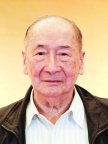
Disciple of Grand Master Wu Kung Yi
75th Anniversary Book, May 2012
Fifty six years of Tai Chi practice
In February 1954, one month after the Wu-Chan Fight, Grand Master Wu Tai Kwei offered Tai Chi classes in the Mongkok Kai Fong Welfare Association. The classes were conducted at the Macpherson Stadium which was opposite to my factory. I started my first 3 months of Tai Chi there. I worked at the Camel Kettle Factory as a vacuum flask technician. The temperature was extremely high in my working environment and the work was extremely tough. Although I was considered a top athlete, I had suffered from hemorrhoids and stomach ache for many years. After learning Tai Chi, my hemorrhoids and stomach ache were cured, and I gained weight.
After attending Grand Master Wu Tai Kwei's Tai Chi class for several months, the Wu's Tai Chi Chuen Academy located at Mongkok was opened. The Mongkok branch was located on Nathan Road, near the now demolished Dong Lok Cinema and opposite to the current United Square. It was at the top floor of a six-storey building. We often practiced Tai Chi on the roof. My home was at the end of Garden Street, just opposite to the Mongkok branch. Every night, I went to the Mongkok branch immediately after I finished dinner. The class began at about 6 p.m. and finished at about 9 to 10 p.m. Congee was often prepared as a late night snack for students. Most students lived in Kowloon and were not wealthy nor businessmen. The transportation was not as convenient as today, and there was no cross harbor tunnel. That did not stop us from going to the Mongkok branch to practise Tai Chi on Saturday regularly for several decades.
At first everybody addressed Grand Master Tai Kwei as Elder Sifu". Later on, four younger students namely Chan Cheong Lap (陳昌立), Tsui Yu Chun (徐汝松), Lee Kwok Shu (李國樞), Leung Fung Sun (梁鳳燊) became Grand Master Wu Tai Kwei's disciples, while the elder students became Grand Master Wu Kung Yi's disciples, and we started addressing Grand Master Wu Tai Kwei as the Elder Si Hing.
At the earlier stage, I was responsible for collecting tuition fees and to teach at the Academy as an Assistant instructor until the Mongkok branch was demolished in 1973. Over the years, many disciples including Hui Shing (許成), Chan Cheong Lap (陳昌立), Chan Yat Ming (陳日明), Fok Wing Chuen (霍永泉), Kiang Hok Chia (薑學齊), Lee Yiu Tong (李耀棠), Chan Pui Wah (陳沛華), Lo Pak Tong (盧柏棠), Wong Kui (黃駒), Ho Kwok Tai (何國泰), Lee Kam Kiu (李金橋), Tam Yiu (譚耀) were active members.
The teaching style of Grand Master Tai Kwei was very flexible. Like his character, his teaching was simple, direct and practical. He provided personal coaching during the practice session between two students so we could observe and listen to his teaching. He repeatedly taught us major principles which were easy to understand, easy to use and were welcomed by the disciples. Many of his disciples could apply Tai Chi Chuan in martial arts and were highly respected in the Marital Arts field.
The monthly fee of Tai Chi class was ten Hong Kong dollars at that time and gradually increased to fifteen dollars. The fee seems low today but not everyone could afford it at that time. A deep-fried dough stick was only five cents and pastries were fifteen cents for two. Thus it was not an easy task to collect fees. During the 1967 riots, Grand Master Wu Tai Kwei was in Singapore. There were not too many students in the Kowloon branch. As a result, Grand Master Wu Kung Yi agreed to come to the Kowloon branch to teach every Thursday night, the enrollment was overwhelming. The charm of Grand Master Wu Kung Yi was evident. Many students could witness his Tai Chi techniques for the first time. I thought Grand Master Wu Tai Kwei's Tai Chi techniques were splendid, but Grand Master Wu Kung Yi was magnificent. Although his movement was minimal, the power generated was enormous. I was puzzled at how it worked.
Grand Master Wu Tai Kwei had many combat experiences. He had fought against and defeated some forty coolies at the Wanchai Pier. He was considered undefeated in the Pearl River Delta. There was an occasion when a wrestler who weighted over hundred kilograms came to challenge Grand Master Wu Tai Kwei. His arm was thicker than my thigh. While he was talking about fixing a day for the contest, he suddenly attacked Grand Master Wu Tai Kwei. Grand Master Wu Tai Kwei used “Grasp Bird's Tail" to resolve his attack and made him fall over on the floor many times until he dared not stand up. He left embarrassed while Grand Master Wu Tai Kwei sat on the sofa far way, trying very hard not to laugh.
Grand Master Wu Tai Kwei was calm during a fight. He had a strong determination to win. His movements were light and elegant. He liked to use "Single Lotus Kick" and "Step Back Repulse Monkey" to crack the heads of his opponents. It was sheer enjoyment to watch him play the sword. In fact, Grand Master Wu Kung Yi and Master Wu Tai Kwei used to practise Tai Chi sword at the YMCA in Tsim Sha Tsui. This attracted many spectators.
Once it was difficult to explain to young people why they should bother to learn what appeared to be an old man's sport, but today it is a joy to witness Tai Chi becoming popular with the young and the old alike. Looking back at the development of Wu's Tai Chi Chuan Academy, my heart goes out to the Headquarters which has become vibrant and lively again under the leadership of both the son and daughter of Grand Master Wu Tai Kwei.