Wustyle HK
  • Our Headquarters
    • Development History
    • Location and Contact Us
    • Organization
    • Disciples at Headquarters
    • Instructors at Headquarters
    • Senior Disciple's / Student's Reflections
    • International Wu Style Tai Chi Chuan Federation
  • Association Notice
  • Academy Activities
    • 2026 Holidays and Major Activities Schedule
    • Activities / Gallery
  • Learning
    • Class Schedule
    • Basic
    • Course of Study
    • Levels and Standards
    • Forms
    • Publications
  • About Wu Style
    • The Origin of Wu's Tai Chi Chuan
    • Wu Family - A Brief History
    • Wu Family Tree
    • Grand Masters And Head of the Family
    • Wu Family Gallery
  1. Home
  2. About Wu Style
  3. The Origin of Wu's Tai Chi Chuan
  4. Wu Family

Grand Master Eddie Wu Kwong Yu
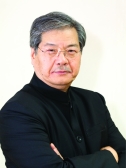
Grand Master Eddie Wu Kwong Yu (1946 - )

Gatekeeper Wu Kwong Yu and his uncle Grand Master Wu Tai Chi set up the Wu's Tai Chi Chuan Academy in Toronto Canada in 1975, and promoted Wu Style Tai Chi Chuan through the Canadian TV and newspaper media. Since then, Gatekeeper Wu Kwong Yu has further promoted Wu Style Tai Chi Chuan in Asia, North America and Europe as well as holding workshops at approved academies and branches in Toronto, Fredericton, Detroit, Ann Arbor, New Jersey, Hawaii, London, Hong Kong, Singapore and Malaysia. By blending Tai Chi Chuan with health science, Gatekeeper Wu Kwong Yu has encouraged businessmen in all industries and athletes to learn Wu Style Tai Chi Chuan.

Grand Master Wu Kwong Yu became the Wu family gatekeeper and chairman of Wu's Tai Chi Chuan Academy Headquarters in 2005.

Gatekeeper Wu Kwong Yu was invited by Chinese Wushu Association and the Wushu Research Institute of the General Administration of Sport of China, to take part in the production of an educational DVD entitled "The China's Wushu Collection - Wu Style Tai Chi Chuan". The essence of Wu Style Tai Chi Chuan, sabre, sword and pushing hands is detailed in the comprehensive demonstrations. Each of the different styles of Tai Chi Tributaries gatekeepers demonstrated their respective styles in order to illustrate the special aspects of their style of Tai Chi. As gatekeeper of Wu Style, Gatekeeper Wu Kwong Yu demonstrated the Wu Style Tai Chi Chuan and push hands in the series.

In 2008. Wushu Research Institue of the General Administration of Sport of China sought to produce a Series of Chinese Wushu Duanwei System. Gatekeeper Wu Kwong Yu was again invited to Zhengzhou as executive editor, and participated in the demonstration video. "Chinese Wushu Duanwei System" is the evaluation system of the Chinese Wushu Association for assessing different levels of martial arts according to Wushu principals. The series provide the curriculum, and evaluation criteria of each Duan level for Wu Style Tai Chi Chuan. The Duanwei system is an important stage ín the development of Wu Style Tai Chi Chuan. Through the standardized system of Duanwei, practitioners can progress, understand and master Wu Style Tai Chi Chuan in a progressive manner.

The Textbook Series of Chinese Wushu Duanwei System: "Wu Style Tai Chi Chuan" was published in 2009. The series was used nationwide by Wushu associations, primary and secondary schools as well as universities. Two of the demonstrators in the video, nationwide Wushu champions, Tong Bao Min and Chen Jun Hua, became gatekeeper Wu Kwong Yu's disciples during the production of the series.

Gatekeeper Wu Kwong Yu is very enthusiastic in promoting martial arts, in Hong Kong and internationally. He holds a number of key positions: Chairman of the Wu's Tai Chi Chuan Academy Headquarters; Chairman of the International Wu Style Tai Chi Chuan Federation; Chairman of the Wu's Tai Chi Chuan Academy (Toronto); Traditional Wushu Advisor of Hong Kong Wushu Union; President of Canadian Organization of Traditional Taiji Quan Association; International Affair Chairman of Wushu Ontario; International Affair Chairman of Confederation of Canadian Wushu Organizations; and Member of the Canadian Olympic Committee and National Wushu Team Canada.

Gatekeeper Wu Kwong Yu was also awarded the “Nationwide Master Level 10", “Martíal Arts Contribution Award" and “Martial Artist Lifetime Achievement Award" by the Confederation of Canadian Wushu Orgainzations.
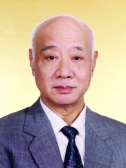
Grand Master Wu Tai Sin

Grand Master Wu Tai Sin (1933-2005)

Grand Master Wu Tai Sin, son of Grand Master Wu Kung Cho, was a fourth generation Gatekeeper of the Wu family. He was born on 26th November 1933. At a very early age he commenced his training with his grandfather Grand Master Wu Chien Chuan in Shanghai. Grand Master Wu Tai Sin came to Hong Kong in the mid 30s with his uncle, Grand Master Wu Kung Yi. Grand Master Wu Tai Sin followed his uncle serving as his assistant until his uncle's death in 1970.

On 29th June 1956, Grand Master Wu Tai Sin took a liner to Singapore to assist establish and teach at the Jian Quan Tai Chi Association which was eventually opened its own premises in 1958. He was heavily involved in promoting Wu's Tai Chi throughout Asia, assisting to establish schools and teaching in Singapore, Malaysia, the Philippines and Macau. Today in each of these locations there still exists Wu's Tai Chi Chuan Academics. Grand Master Wu Tai Sin was also welcomed in Canada where he was frequently invited to teach. In Hong Kong on the 15th July 2001, Grand Master Wu Tai Sin became the Wu family gatekeeper. From 1973 to 2002 he took 13 batches of disciples: a total of 58 disciples in Hong Kong, 20 in Singapore and numerous disciples in Malaysia.

Both Grand Master Wu Tai Sin and his father Grand Master Wu Kung Cho were famed for their skill with the Tai Chi Sabre. Grand Master Wu Tai Sin strongly promoted the Sabre and was renowned for his spear skills, his encyclopedic knowledge of the form and his sublime push hand skills.

Grand Master Wu Tai Sin was reunited with his father in Hong Kong in 1979 and studied with him until his death.

It was acknowledged by his peers that because of Grand Master Wu Tai Sin's early intensive training, loyalty and diligence in following his uncle Grand Master Wu Kung Yi and his father Grand Master Wu Kung Cho that he had acquired both Grand Master Wu Kung Yi's and Grand Master Wu Kung Cho's art. Grand Master Wu Tai Sin had been well prepared from childhood. Tai Chi was his life and he left a vibrant legacy in his disciples some of whom studied with him for over 30 years and are spread over Asia.

Grand Master Wu Yan Hsia

Grand Master Wu Yan Hsia (1931-2001)

Grand Master Wu Yan Hsia was born in Shanghai in 1931, and became a fourth generation grandmaster of Wu Style Tai Chi. Her great grandfather, Chuan Yau, practiced martial arts under Yang Luxian and Yang Banhou.He served the Qing royal family, was a martial arts instructor for the presidential guards of Republic of China, and head referee in the National Martial Arts Competition. Her father, Grand Master Wu Kung Yi, was a drill instructor at Huangpu Military Academy and a coach at Sun Yat-Sen University. The 1954 charity match held in Macau (Grand Master Wu Kung Yì vs. Master Chan Hak Fu) was well-known throughout the world, and was a first in Kungfu open competitions. Her uncle, Grand Master Wu Kung Cho, was instructor in the Hunan Martial Arts Institute. Her brothers, Grand Masters Wu Tai Kwei and Wu Tai Chi were both well-known in their days.

Grand Master Wu Yan Hsia began practicing Tai Chi at the age of eight. She was known as the "Best Sword in Taichi" for her graceful style in Tai Chi Sword, which she often demonstrated in public events.

During the Japanese invasion, the family fled to Hunan and Guandong (mainly in Changsha and Macau), and Wu Style Tai Chi Chuan Academy was formed in Shanghai, Changsha and Macau. Grand Master Wu Yan Hsia returned to Shanghai after the war, then moved to Hong Kong after she married Kwok Hsia Jong. While teaching at the Kowloon Tong School, she helped Grand Master Wu Kung Yi run the Academy, which continued to prosper, branching out to Nathan Road and Jordan Road (its current headquarters), then further expanding into South East Asia and North America.

Grand Master Wu Yan Hsia took over as chairman of the Academy in 1993, with Master Wu Tai Sin and Master Kwok Hsia Jong as vice Chairman. In 1995, she presided over the inauguration of the International Wu Style Tai Chi Chuan Federation in Canada, attended by hundreds of students worldwide. In 1998, she officially opened the Hawaii branch, further promoting Wu Style Tai Chi Chuan in North America. In 1998-1999, Grand Master Wu Yan Hsia frequented Singapore, Kuala Lumpur, Penang, Hong Kong and Shanghai to speed development.

Grand Master Wu Yan Hsia had an eye for talent and a high standard for accepting disciples, with a total of thirteen disciples over her entire career. She was always patient, approachable and methodical, and students from various cultures and all walks of life have benefited from her teaching and guidance. Through her hard work, she had helped to establish Wu Style Tai Chi Chuan as an essential element of the Chinese culture.

Grand Master Wu Yan Hsia will be remembered for her kindness, generosity and charisma. Her selfless and giving nature will be missed by family and friends. The essence of Wu Style Tai Chi Chuan - the duality of flexibility and strength was fully reflected in the way she carried on the family business and her sincerity toward others.

Grand Master Wu Tai Chi

Grand Master Wu Tai Chi (1926-1993)

Grand Master Wu Tai Chi taught Wu Style Tai Chi Chuan throughout Southeast Asia and established an academy in Malaysia. The Toronto academy was started in 1975 by Grand Master Wu Tai Chi when members of the Chinese community of Toronto, Canada invited Grand Master Wu Tai Kwei to establish a Canadian Wu's Tai Chi Chuan academy branch. Grand Master Wu Tai Kwei died before his wish became a reality and it passed on to his brother Grand Master Wu Tai Chi and his nephew Grand Master Eddie Wu Kwong Yu. After spending one year in Toronto academy, he returned to Hong Kong in 1976 to continue to manage the Hong Kong headquarters. The Toronto academy was passed to Grand Master Eddie Wu Kwong Yu.

Grand Master Wu Tai Chi sat on the Advisory Board of the Hong Kong Wushu Union in Hong Kong until he passed away in 1993 in Hong Kong.

Grand Master Wu Tai Kwei

Grand Master Wu Tai Kwei (1923-1972)

Grand Master Wu Tai Kwei was the eldest son of Grand Master Wu Kung Yi, and was the Wu Style Tai Chi Chuan 4th Generation Gatekeeper. Grand Master Wu Tai Kwei's Tai Chi Chuan was trained directly by his grand father Wu Chien Chuan when he was a young kid. After Grand Master Wu Tai Kwei had grown up, he assisted his father to promote Wu Style Tai Chi Chuan to South East Asia, and established presence in Hong Kong, Kowloon, Macau, Philippines, Singapore and Malaysia.

Grand Master Wu Tai Kwei was also frequently invited to demonstrate Wu Style Tai Chi in TV programs in Hong Kong and Singapore, and was well received by TV audiences. And through TV media presence in those days, Wu Style Tai Chi Chuan thus established a popularity foundation in the public arena across Asia.

In the 50s, Grand Master Wu Tai Kwei was invited by Japanese Martial Arts organizations to make "Skill Exchange" visits to Japan. Through these exchange sessions, Grand Master Wu Tai Kwei successfully showed the agility of combat power of Wu Style Tai Chi Chuan to Japanese martial arts practitioners and arose enormous interest in Japan in Tai Chi Chuan philosophy.

After the Wu Chan Fight in 1954, Wu Style Tai Chi Chuan gained extensive popularity in the South East Asia, and many Chinese communities in the regions requested Grand Master Wu Kung Yi to establish branch teaching points there. Grand Master Wu Kung Yi thus assigned Grand Masters Wu Tai Chi and Wu Tai Sin to establish branch academies in Singapore, Kula Lumpa, and Manila; and also assigned Grand Master Wu Tai Kwei to establish Kowloon branch academy on Nathan Road. As the number of student substantially grew, Grand Master Wu Kung Yi thus purchased a property in Jordan Road, Kowloon as the Wu's Tai Chi Chuan Academy Headquarters in Hong Kong.

Grand Master Wu Tai Kwei was the consulting member of Hong Kong Wushu Union. In 1960s, a few disciples of Master Wu Tai Kwei emigrated to Canada, and initiated the idea to Grand Master Wu Tai Kwei to establish Wu Style Tai Chi Chuan presence in North America, and this was eventually fulfilled by his younger brother Wu Tai Chi and his eldest son Wu Kwong Yu. His eldest son Wu Kwong Yu, the current gatekeeper of Wu's Tai Chi Chuan, continues the endeavor to popularize Wu Style Tai Chi Chuan globally around the world.

  1. Grand Master Wu Ying Hua
  2. Grand Master Wu Kung Cho
  3. Grand Master Wu Kung Yi
  4. Grand Master Wu Chien Chuan
Copyright © Kam Chuen Tai Kik Boxing Association Limited, Hong Kong. All Rights Reserved.
Wustyle HK
  • Our Headquarters
    • Development History
    • Location and Contact Us
    • Organization
    • Disciples at Headquarters
    • Instructors at Headquarters
    • Senior Disciple's / Student's Reflections
    • International Wu Style Tai Chi Chuan Federation
  • Association Notice
  • Academy Activities
    • 2026 Holidays and Major Activities Schedule
    • Activities / Gallery
  • Learning
    • Class Schedule
    • Basic
    • Course of Study
    • Levels and Standards
    • Forms
    • Publications
  • About Wu Style
    • The Origin of Wu's Tai Chi Chuan
    • Wu Family - A Brief History
    • Wu Family Tree
    • Grand Masters And Head of the Family
    • Wu Family Gallery