Wustyle HK
  • Our Headquarters
    • Development History
    • Location and Contact Us
    • Organization
    • Disciples at Headquarters
    • Instructors at Headquarters
    • Senior Disciple's / Student's Reflections
    • International Wu Style Tai Chi Chuan Federation
  • Association Notice
  • Academy Activities
    • 2026 Holidays and Major Activities Schedule
    • Activities / Gallery
  • Learning
    • Class Schedule
    • Basic
    • Course of Study
    • Levels and Standards
    • Forms
    • Publications
  • About Wu Style
    • The Origin of Wu's Tai Chi Chuan
    • Wu Family - A Brief History
    • Wu Family Tree
    • Grand Masters And Head of the Family
    • Wu Family Gallery
  1. Home
  2. Our Headquarters
  3. Senior Disciple's / Student's Reflections
  4. Disciples

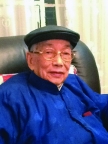
Kwok Hsia Jong's Reflection

on in Law and Disciple of Grand Master Wu Kung Yi

75th Anniversary Book, May 2012


Reflections on Six Decades

My inseparable ties with Taichi began in 1945, after the second Sino-Japanese War, when I met and became friends with Wu Tai Kwei and his sister Wu Yan Hsia at Tongfu East Road, Guangzhou.

In 1946, Wu Tai Chi came to Guangzhou on his father Wu Kung Yi directive, and along with Zhao Zhongbo (Grand Master Wu Kung Yi's sworn brother, a military law officer under Commander Zhang Fakui of the Guangzhou Detachment), presided over the ceremony of my engagement to Wu Yan Hsia, held at the Datong Restaurant in Guangzhou.

The wedding was held on 4 August, 1947, at the Garden Hotel's private club on Ruijin Road, Shanghai, where Grand Master Wu Kung Yi personally presided over the ceremony, attended by well over three hundred special guests.

I joined the management board of Jianquan Taichi Association in 1952 upon the invitation of Grand Master Wu Kung Yi (who was President at the time and Yuan Xi was Director). Since then, I have headed up various functions for the Association, including: Secretariat, General Affairs, Education, Promotion and Benefits. As well, I have served as the Third Vice-President (during which time, Wu Tai Chi was the President, Wu Yan Hsia was the First Vice President and Wu Tai Sin was the Second Vice President). For several decades, I have served Grand Master Wu Kung Yi, and witnessed three generations of the Wu family and six Association Presidents. In these past sixty years, my union with the Wu family has made me what I am, and in return I have serviced it wholeheartedly.

Since the days of ChuanYau some one-hundred years and six generations ago, the Wu family has never ceased to build upon its glorious foundation, with countless proud achievements generation after generation. May the Association continue to prosper and flourish around the world.

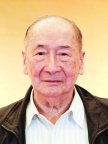
Yip Sue Leong's Reflection

Disciple of Grand Master Wu Kung Yi

75th Anniversary Book, May 2012


Fifty six years of Tai Chi practice

In February 1954, one month after the Wu-Chan Fight, Grand Master Wu Tai Kwei offered Tai Chi classes in the Mongkok Kai Fong Welfare Association. The classes were conducted at the Macpherson Stadium which was opposite to my factory. I started my first 3 months of Tai Chi there. I worked at the Camel Kettle Factory as a vacuum flask technician. The temperature was extremely high in my working environment and the work was extremely tough. Although I was considered a top athlete, I had suffered from hemorrhoids and stomach ache for many years. After learning Tai Chi, my hemorrhoids and stomach ache were cured, and I gained weight.

After attending Grand Master Wu Tai Kwei's Tai Chi class for several months, the Wu's Tai Chi Chuen Academy located at Mongkok was opened. The Mongkok branch was located on Nathan Road, near the now demolished Dong Lok Cinema and opposite to the current United Square. It was at the top floor of a six-storey building. We often practiced Tai Chi on the roof. My home was at the end of Garden Street, just opposite to the Mongkok branch. Every night, I went to the Mongkok branch immediately after I finished dinner. The class began at about 6 p.m. and finished at about 9 to 10 p.m. Congee was often prepared as a late night snack for students. Most students lived in Kowloon and were not wealthy nor businessmen. The transportation was not as convenient as today, and there was no cross harbor tunnel. That did not stop us from going to the Mongkok branch to practise Tai Chi on Saturday regularly for several decades.

At first everybody addressed Grand Master Tai Kwei as Elder Sifu". Later on, four younger students namely Chan Cheong Lap (陳昌立), Tsui Yu Chun (徐汝松), Lee Kwok Shu (李國樞), Leung Fung Sun (梁鳳燊) became Grand Master Wu Tai Kwei's disciples, while the elder students became Grand Master Wu Kung Yi's disciples, and we started addressing Grand Master Wu Tai Kwei as the Elder Si Hing.

At the earlier stage, I was responsible for collecting tuition fees and to teach at the Academy as an Assistant instructor until the Mongkok branch was demolished in 1973. Over the years, many disciples including Hui Shing (許成), Chan Cheong Lap (陳昌立), Chan Yat Ming (陳日明), Fok Wing Chuen (霍永泉), Kiang Hok Chia (薑學齊), Lee Yiu Tong (李耀棠), Chan Pui Wah (陳沛華), Lo Pak Tong (盧柏棠), Wong Kui (黃駒), Ho Kwok Tai (何國泰), Lee Kam Kiu (李金橋), Tam Yiu (譚耀) were active members.

The teaching style of Grand Master Tai Kwei was very flexible. Like his character, his teaching was simple, direct and practical. He provided personal coaching during the practice session between two students so we could observe and listen to his teaching. He repeatedly taught us major principles which were easy to understand, easy to use and were welcomed by the disciples. Many of his disciples could apply Tai Chi Chuan in martial arts and were highly respected in the Marital Arts field.

The monthly fee of Tai Chi class was ten Hong Kong dollars at that time and gradually increased to fifteen dollars. The fee seems low today but not everyone could afford it at that time. A deep-fried dough stick was only five cents and pastries were fifteen cents for two. Thus it was not an easy task to collect fees. During the 1967 riots, Grand Master Wu Tai Kwei was in Singapore. There were not too many students in the Kowloon branch. As a result, Grand Master Wu Kung Yi agreed to come to the Kowloon branch to teach every Thursday night, the enrollment was overwhelming. The charm of Grand Master Wu Kung Yi was evident. Many students could witness his Tai Chi techniques for the first time. I thought Grand Master Wu Tai Kwei's Tai Chi techniques were splendid, but Grand Master Wu Kung Yi was magnificent. Although his movement was minimal, the power generated was enormous. I was puzzled at how it worked.

Grand Master Wu Tai Kwei had many combat experiences. He had fought against and defeated some forty coolies at the Wanchai Pier. He was considered undefeated in the Pearl River Delta. There was an occasion when a wrestler who weighted over hundred kilograms came to challenge Grand Master Wu Tai Kwei. His arm was thicker than my thigh. While he was talking about fixing a day for the contest, he suddenly attacked Grand Master Wu Tai Kwei. Grand Master Wu Tai Kwei used “Grasp Bird's Tail" to resolve his attack and made him fall over on the floor many times until he dared not stand up. He left embarrassed while Grand Master Wu Tai Kwei sat on the sofa far way, trying very hard not to laugh.

Grand Master Wu Tai Kwei was calm during a fight. He had a strong determination to win. His movements were light and elegant. He liked to use "Single Lotus Kick" and "Step Back Repulse Monkey" to crack the heads of his opponents. It was sheer enjoyment to watch him play the sword. In fact, Grand Master Wu Kung Yi and Master Wu Tai Kwei used to practise Tai Chi sword at the YMCA in Tsim Sha Tsui. This attracted many spectators.

Once it was difficult to explain to young people why they should bother to learn what appeared to be an old man's sport, but today it is a joy to witness Tai Chi becoming popular with the young and the old alike. Looking back at the development of Wu's Tai Chi Chuan Academy, my heart goes out to the Headquarters which has become vibrant and lively again under the leadership of both the son and daughter of Grand Master Wu Tai Kwei.

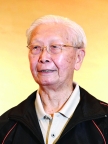
Chan Pui Wah's Reflection

Disciple of Grand Master Wu Kung Yi

75th Anniversary Book, May 2012


My days in Kowloon Branch

On a summer day in 1956, I stepped into a flat on the 6th floor of 745D Nathan Road in Kowloon. It was the Kowloon Branch of Wu's Tai Chi Chuan Academy. From that date onwards, I established my bond with Wu Style Tai Chi Chuan. Over 50 years have lapsed since then. My Sifu was Grand Master Wu Tai Kwei, he was the Academy Director at that time. The assistant instructor was Lee Cheung Su who was also known as Lee Su. Lee Su later left the academy for personal reasons. I and a few other senior students were selected by Grand Master Wu Tai Kwei as assistant instructors. I was the most junior at that time.

Grand Master Wu Tai Kwei's kung fu was both amazing and superb. He was well known for his ability in martial art applications. Whenever Grand Master Wu Tai Kwei coached push hands in class, all students would pay serious attention to his form and movement. Grand Master Wu Tai Kwei used a “20%" rule whenever he pushed hands with a student. His 20% rule was that whenever he practised push hands with a student, he would just apply a little bit of pressure, which was just 20% above the the level of skill of the student; a rule that Grand Master Wu Tai Kwei would stick to no matter what was the level of the student. The reason that Grand Master Wu Tai Kwei used this 20% rule was that it would be much easier for the students to feel and digest the push hands technique. This is particularly useful as in push hands one needs to master the direction and strength of each push. If the push were too heavy the student would not be able to react to it and it would serve no practical purpose. Mastering push hands to the level of micro manipulation is actually extremely difficult and Grand Master Wu Tai Kwei at that time was well known and highly respected in the 'Tai Chi Chuan arena for his push hands.

Core members in the Academy in those days included Yip Su Liang (葉樹良), Fok Wing Chuen (霍永泉), Chan Cheong Lap (陳昌立), Tsui Yu Chung (徐汝松), Lee Kowk Wing (李國穎), Lee Kwok Shu (李國樞), Chan Yat Ming (陳日明), Ho Seng (何生), Keung Hok Chia (羗學齊), Yeung Ching Kong (楊澄江), Lee Yiu Tong (李耀棠), Lo Pak Tong (盧柏棠), Hui Shing (許成), So Wai Hung (蘇偉雄), Chung Ching (鍾正), Wei Nai Shek (衛勵石), Lee Kui (李僑), Tam Yiu (譚耀) and Wong Ku (黃駒). In July of 1963, Grand Master Wu Kung Yi decided to adopt disciples, and I was grateful to be nominated by Grand Master Wu Tai Kwei to become a disciple of Grand Master Wu Kung Yi. Thereafter, I addressed Grand Master Wu Tai Kwei as Eldest Si Hing.

Grand Master Wu Tai Kwei was well known for his ferocious real life combat. This attracted the attention of many martial arts practitioners, I personally observed Grand Master Wu Tai Kwei receiving a Judo visitor and a Fencing visitor. Both of them were obviously very surprised and complimentary about the high level of skill that Grand Master Wu Tai Kwei demonstrated and which they had no answer to.

Once I was also involved to a young guy who came with his mother to visit Mrs. Wu Tai Kwei. The guy was quite muscular. He was watching our Tai Chi class and commented that Tai Chi was only useful for health and made derogatory remarks about Tai Chi's practical application. Mrs. Wu Tai Kwei was a bit irritated by his impoliteness, and asked me to fight with him. I broke his nose.

Grand Master Wu Tai Kwei was a humorous man and treated all disciples well. In those days, So Wai Hung would sometimes prepare congee and fried flour rolls for us as supper after class in the evening. In Cantonese, there is an expression sometimes used to describe somebody who practices martial arts: "Had Eaten Late Evening Congee Meal". We demonstrated how such an expression might have come about. Sometimes we played mahjong after class. We had a marvelous time together with Grand Master Wu Tai Kwei in those days.

Unfortunately Grand Master Wu Tai Kwei passed away a few years later and the Kowloon Branch was subsequently demolished. A disciple called Hui Shing later arranged disciple meetings every Sunday at a school (宣道學校)to practice Tai Chi Chuan and push hands. After Hui Shing retired and emigrated we relocated to Ho Fung Secondary School led by Chan Cheong Lap. Classes have now taken place there for 30 years and it is one of the major training centers for Wu Style Tai Chi Chuan in Hong Kong.

Under the leadership of Grand Master Eddie Wu Kwong Yu, Wu Style Tai Chi Chuan has continued to develop both in Hong Kong and overseas. It gives me great pleasure to see Wu Style Tai Chi Chuan continue to flourish and give pleasure to new generations of practitioners both here and overseas.

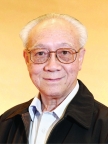
Tsoi Nie Biu's Reflection

Disciple of Grand Master Wu Kung Yi

75th Anniversary Book, May 2012


The spread of Wu's Tai Chi to Southern China establishing a base and passing on genuine Tai Chi Chuan.

It is the celebration of the 75th Anniversary of the establishment of the Wu's Tai Chi Chuan Academy Headquarters. As we all know, Chinese's Martíal Arts have been around for thousands of years. Since the end of the Qing Dynasty, Wu's Tai Chi Chuan has been passed on for five generations. The ancestors were generous in teaching Tai Chi's philosophy to those who were keen to learn. Those who learnt from them treasured the knowledge and through daily practice, were able to achieve good health. We are all so lucky to benefit from Tai Chi.

Tai Chi Chuan, which was previously only taught in the Royal Palace, became publicly taught in the early 1900s. The Yang & Wu families were very famous in Martial Arts circles. There existed numerous stories inside and outside of the Palace about their prowess.

During the occupation of Beijing by foreign forces towards the end of the 19th century, one morning Grand Master Wu ChienChuan heard a rifle shot. He left on horse back in a hurry with his bow. Foreign soldiers chased after him and Grand Master Wu ChienChuan shot two soldiers with arrows from horseback.

After this, there was chaos in the city and many were thinking about moving away. Grand Master Wu ChienChuan's family moved south first from Beijing to Cheung Sha, then to Guangzhou and eventually to Hong Kong to establish the 1st Wu's Tai Chi Chuan Academy in Hong Kong.

The Wu family travelled thousands of miles southward. Wherever they stayed, the seeds of Wu's Tai Chi Chuan were sowed.

Grand Master Wu Kung Cho was the teacher of General Ho Kin and also the army training Head at Cheung Sha. In Guangzhou, the Chin Woo Sports Club extended a huge welcome. Lau Wing Him, Chiu Chun, Choi Kai Chiu were also admitted as disciples. Grand Master Wu Kung Yi admitted Yuk Yan from Macau York Shan Temple as a disciple. Grand Master Tai Kwei demonstrated his Martial Arts at Faoshan and admitted students and disciples. The Group expanded to over a hundred spanning two generations. At that time in Hong Kong, through the Headquarters and its branch, under the leadership of Grand Master Wu Tai Chi, Grand Master Wu Tai Sin and Grand Master Wu Yan Hsia, there were 9 rounds of disciples admitted over a few decades. I was fortunate enough to be the Master of Ceremony at some of these ceremonies.

Grand Master Wu Kung Yi was invited to Singapore in 1958 to establish a Branch. It has been in existence now for over half a century with quite a number of disciples.

Grand Master Wu Kwong Yu has lived in Canada for over 30 years. He established the international academy branches for Wu's Tai Chi Chuan. His disciples include Chinese & westerners. He is well recognized around the world. Subsequently, he returned to Hong Kong to be the Gatekeeper. Because of his diligence, the Wu Style Tai Chi Chuan Academy headquarters has now been refreshed, and new comers to learn Tai Chi are increasing. We all support his target of further expansion and development.

How time flies! It has been 75 years since Grand Master Wu Kung Yi and Grand Master Wu Kung Cho came to Hong Kong in 1937 to establish the Hong Kong ChienChuan Tai Chi Academy, located at 4/F, 387, Lockhart Rd. It was the base from which Wu's Tai Chi Chuan developed in Hong Kong. Subsequently, an Academy's Executive Committee was formed. There have been 32 committees over the years There has been growth over the years in both students & activities. The executive committee has been instrumental in the growth of the Academy in terms of student population and prosperity. Those who have served as Committee members, just to name a few are, Kwok Hsia Jong, Dai Shiu Chiu, Chung Ngok Ping, Lee Chi Nam, Ho San, Wong Hon Wing, Ng Man Biu, Ho Biu, Hui Dao San, Ng Chiu Kit, Lee Yiu Tong, Yip Shui Leung, Chan Pui Wah, Chan Cheong Lap, Shek Yiu Choi, Heung Lap Chi(各常任理事有郭少烱、戴少樵、鍾岳平、李志楠、何生丶黃漢榮、吳文表、何標、許道生、吳超杰、李耀棠、葉樹良、陳沛華、陳昌立、石耀初丶香立智),and the current Committee President Chui Shing Yip(徐成業), along with many other committee members who have contributed significantly; and helped to bring about the growth of Wu's Tai Chi Chuan Academy to-date.

Chan Cheong Lap's Reflection

Disciple of Grand Master Wu Tai Kwei

75th Anniversary Book, May 2012


In memory of Master Wu Tai Kwei and in deep appreciation of the teaching provided by the Wu family

Due to having been born weak, I decided to learn Tai Chi Chuan in order to build up my body and become healthy. I started practicing at Wu's Tai Chi Chuan Kowloon Academy. After practising for seven years, I was honored to be chosen as a disciple by Grand Master Wu Tai Kwei, and I learnt and improved a lot through his coaching. I am writing this article while we celebrate the 75th anniversary of Wu's Tai Chi Chuan Academy Headquarters, in memory of Grand Master Wu Tai Kwei and those Wu's ancestors who have taught me, in order that other practitioners and disciples can learn more about them.

Systematic Coaching - to facilitate combat

Grand Master Wu Tai Kwei taught Tai Chi in a systematic way which built up my skills and knowledge progressively – the 108 standard form followed by the round form, 24-styles, push hands without foot work, then with foot work, and then close range combat by resolving forces, capturing and locking, free style push hands, normal range combat and power generation (exerting "jin").

Grand Master Wu Tai Kwei would only teach me one method of close range combat at a time. He would practice with me repeatedly until I was proficient with the method, and it became instinctive. He then taught me how the method can be defended against at the next class, and these has to be practised until they became instinctive before he would teach me other methods. All the wrestling and dropping techniques were practiced on ceramic floors, Grand Master Wu Tai Kwei did this on purpose so we would get used to break falling on hard floors.

Grand Master Wu Tai Kwei would do free style push hands with us one after the other, once we lost balance it was the next student's turn. He would still be relaxed after 7-8 of us had pushed hands with him. He said that free style push hands has to be learnt through experience, and they are all good moves as long as they were in line with Tai Chi principles. One who is at the highest skill level in close range combat, can apply the eight methods appropriately to move the opponent's spine by a mere half inch then, at the instant of body contact, knock down the opponent.

Grand Master Tai Kwei also taught us how to make use of a fraction of the opponent's incoming force, which he called "nervous system attack". When we practiced and were punched, it hurt so much the bruises wouldn't fade away for more than a week. If we practised with power, we strapped two pillows on our chest and on top added a shield used in fencing, but even with such protection, there was no guarantee that we wouldn't get hurt.

When Grand Master Wu Tai Kwei trained his disciples, he ensured the training was practical for martial arts purposes, enforced basic movements, push hands, resolve and capture, use of legs and feet, body movements and positioning as well as foot work, plus the psychology of combat. I remember well the "tiger and sick cat" theory, when facing a strong opponent, regard him as a sick cat, and look down on hím so not to be scared by him; while facing a weak opponent, treat him like a tiger, this way, you won't become care- less during combat.

The sword for lightness and flexibility, There can be no miss with a spear

Grand Master Tai Kwei taught us the Tai Chi Sword three times, each time it was slightly different, my guess is that there is no particular definitive style, what is important is that it is played in line with Tai Chi principles, and one is able to use the sword with ones mind, and according to the situation. For example, in the style "white snake spit tongue (白蛇吐信)”,one is supposed to thrust in the standard form, but if there is a wall right in front, Grand Master Wu Tai Kwei would use foot work to adjust and the change is amazing!

Grand Master Wu Tai Kwei told us that when we use a sword, the sword and eye sight must be inline. The basic principle is accuracy. He said the same went for the spear. As the Tai Chi Spear was originally to be used on horse back, he didn't practice it all the time. I remembered once he asked us to stack up two folding chairs. He turned suddenly and speared right when his eyes caught the chairs. The top chair was speared at the thinner side and it just flew away. He then applied a second spear at the wall, and left 5 holes shaped like a flower on the wall. What amazed us was the spear was nearly ten feet long, and it was vibrating like crazy at the spear head.

Admired in the West, Shock and Awe in the East

Once there were two British men, an amateur boxing champion, and an amateur fencing champion who came to the Academy. They wanted to try out Grand Master Wu Tai Kwei's kungfu, and I was asked to be the translator to the Grand Master.

The boxer attacked with a left hook, and Grand Master Wu Tai Kwei reacted by "Lean Back and Kick (48th movement-披身踢腳)”,and the boxer lost balance and fell forward. Grand Master's left foot was already in his groin area.

The fencer said the Chinese sword looked heavy and inflexible, while the western sword was lighter and more flexible than Chinese sword, and he couldn't imagine how the Chinese sword could be able to sustain the attack coming from the western sword. Grand Master Wu Tai Kwei replied by saying sword was an extension of one's arm, and only those who could deliver power all the way to the tip of the sword, were masters of sword. The sword man asked for a demonstration fight, and speared at Grand Master Wu Tai Kwei. Grand Master Wu Tai Kwei touched the fencer's sword with his, and delivered power to the tip of his sword; the fencer lost his grip and his sword twisted and flew out of his hand. Grand Master Wu Tai Kwei asked him to try again. He did and purposely held onto his sword tightly so the sword could not be dislodged, but this time the sword was sent back over 90 degrees by Grand Master’s power, and the fencer twisted and injured his wrist.

Tai Chi on Hong Kong TV

During 1967 and 1968, Redifusion TV invited Grand Master Wu Kung Yi to host a TV program "Tai Chi Chuan". The TV show lasted for just over 8 months, and was broadcasted live weekly. I was honoured to be responsible for explaining the theory behind the Form from the 2nd episode onwards. Grand Master Wu Kung Yi decided on the show contents while Chung Ngok Ping(鍾岳平) explained how each Form was played, and Choi Nei Biu(蔡乃標) would demonstrate. In the last episode, Grand Master Wu Kung Yi and his disciple Chung Ngok Ping demonstrated push hands applications. Before the live broadcasting, Grand Master Wu Kung Yi asked Chung to attack him from behind, and Grand Master Wu Kung Yi would use “Turn Body and Slap Face with Palm”(99th movement-轉身撲面掌) to counter. Grand Master Wu Kung Yi asked Chung to attack without any warning nor pre-determined position. During the live broadcasting, Chung followed Grand Master's instruction and attacked him from behind with full force. In the split second before he punched at Grand Master's back, Grand Master reacted instinctively; turned, resolved and fought back, and Chung was knocked off his feet and his lip cut.

Radio Television Hong Kong (RTHK) English Channel invited Wu's Tai Chi Chuan Academy to demonstrate in a two-part series, aimed to introduce Wu Style Tai Chi Chuan to the viewers. This time, Grand Master Wu Yan Hsia and Grand Master Wu Tai Sin led their disciples in demonstrating saber, sword and push hands, and I was responsible for writing the scripts and narration. The show was directed and the Tai Chi movements were filmed in an artistic way and the show was well received by viewers. The show greatly aroused interest in Tai Chi and the Academy became very well known.

Proud but humble with Tai Chi

Grand Master Wu Tai Kwei was a straight-forward man who spoke from his heart, carefree on minor things. He was approachable and humorous. After each class, he would join all the disciples for congee as a late night snack, and told us stories about“Wulin”(武林,Chinese saying of Kung Fu Community) that he learnt and witnessed while he traveled around with his grandfather and father. We found those stories eye-opening and interesting.

Grand Master Wu Tai Kwei was invited by Japan's Wu Shu community to visit Japan as guest of honor to demonstrate Tai Chi Chuan and exchange martial arts techniques and theories with them. The visit was big news in Japan. Grand Master Wu Tai Kwei traveled to Tokyo by cruise ship, and then visited Kobe, Osaka, and Yokohama. During the two months visit, he visited local Budokans(武道館), where the Japanese would demonstrate martial arts in front of him. They purposely made strikes right to his nose, but Grand Master Wu Tai Kwei wouldn't even blink. This stopped them from escalating their provocative behavior. Grand Master Wu Tai Kwei Wrote in brush.“我武維揚”(loosely translated as The Great Wushu). which the Japanese kept as a treasure. According to the Japanese, they believed Judo was originated from China, and was called“Jujitsu”(柔術). Tai Chi Chuan was highly respected and the Japanese called it the origin of Judo. The trip to Japan was very successful and Grand Master Wu Tai Kwei earned a lot of respect from the Japanese.

Grand Master Wu Tai Kwei shined with his great talent and skills in Tai Chi Chuan. He dedicated his life, traveled around Asia to spread and share the greatness of Tai Chi Chuan, with great success.
  1. Li Yiu Tong's Reflection
  2. Lo Pak Tong‘s Reflection
  3. Disciple of Grand Master Wu Kung Yi
  4. Disciple of Grand Master Wu Kung Cho
Copyright © Kam Chuen Tai Kik Boxing Association Limited, Hong Kong. All Rights Reserved.
Wustyle HK
  • Our Headquarters
    • Development History
    • Location and Contact Us
    • Organization
    • Disciples at Headquarters
    • Instructors at Headquarters
    • Senior Disciple's / Student's Reflections
    • International Wu Style Tai Chi Chuan Federation
  • Association Notice
  • Academy Activities
    • 2026 Holidays and Major Activities Schedule
    • Activities / Gallery
  • Learning
    • Class Schedule
    • Basic
    • Course of Study
    • Levels and Standards
    • Forms
    • Publications
  • About Wu Style
    • The Origin of Wu's Tai Chi Chuan
    • Wu Family - A Brief History
    • Wu Family Tree
    • Grand Masters And Head of the Family
    • Wu Family Gallery